AUTOMATION PROTOTYPE / PROTOTYPE
RunPod Media Orchestrator
Prototype RunPod workflow for provisioning GPU compute, transferring prompts, running media jobs, retrieving outputs, and tearing down resources.
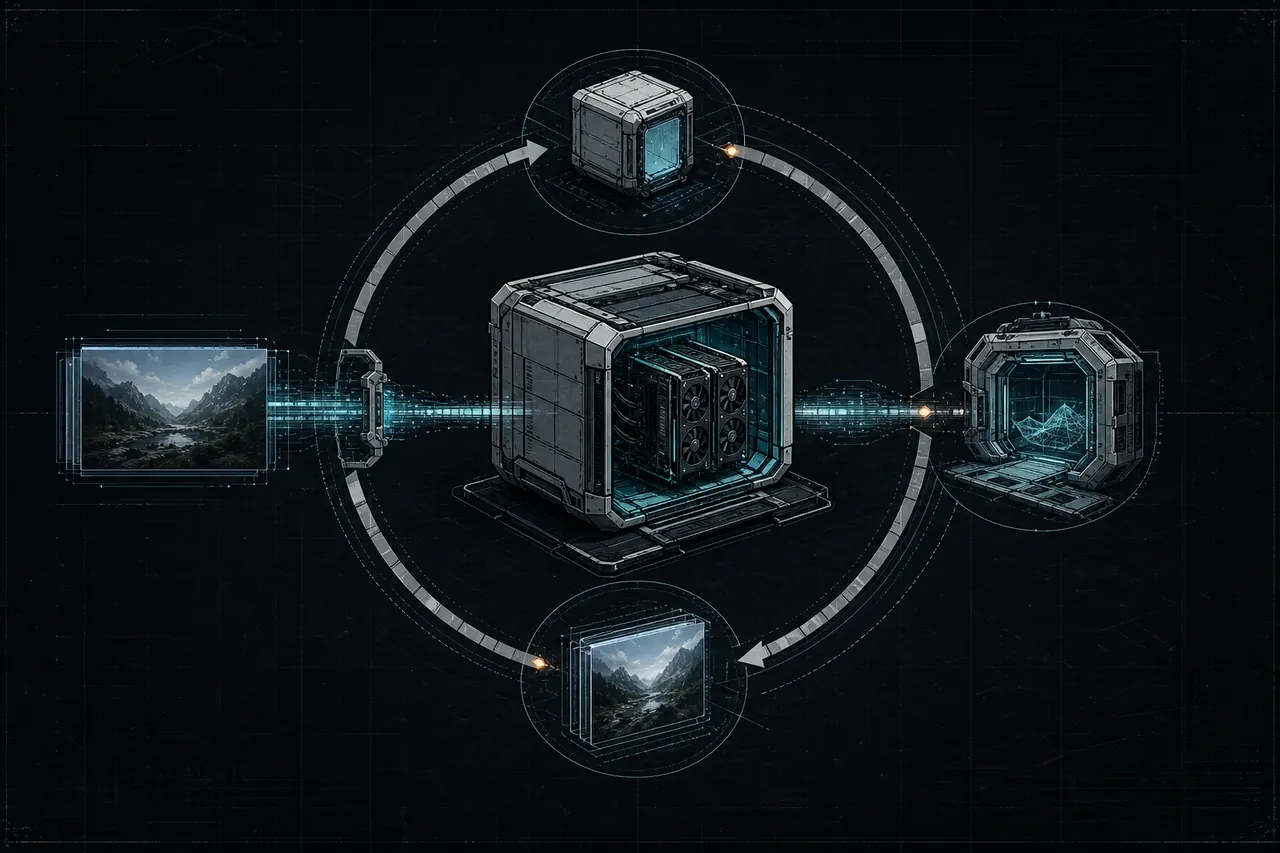
SYSTEM QUESTION
Make the temporary GPU lifecycle explicit from operator confirmation through provisioning, transfer, execution, retrieval, and teardown.
API credentials, generated prompts, remote shell access, output files, and paid compute cross several privilege and data boundaries.
DIRECT ANSWER
What does RunPod Media Orchestrator do?
Prototype RunPod workflow for provisioning GPU compute, transferring prompts, running media jobs, retrieving outputs, and tearing down resources. It addresses api credentials, generated prompts, remote shell access, output files, and paid compute cross several privilege and data boundaries.
ROLE & SCOPE
The inspected repository establishes an automation implementation but does not establish an individual contributor role.
The audited slice covers channel selection, prompt assembly, operator confirmation, RunPod GraphQL calls, readiness polling, SSH and SFTP transfer, remote execution, SCP retrieval, and termination.
CONSTRAINTS
SSH host keys are accepted automatically, exceptions are handled broadly, and no cost, reliability, audience, or production claim is made.
ARCHITECTURE
-
Channel selection
loads local channel configuration and requires an interactive selection
channel_manager.py -
Prompt assembly
generates video, voice, and music prompt components through Gemini with local fallbacks
prompt_generator.py -
RunPod GraphQL lifecycle
creates a secure-cloud GPU request, polls readiness, and terminates the pod
runpod_auto.py -
SSH and SFTP execution
uploads prompt data and invokes the remote pipeline
runpod_auto.py -
SCP retrieval
copies the generated media output back to the operator host
runpod_auto.py
TRUST BOUNDARIES
Operator host to RunPod API
Provisioning and termination requests use an authorization header assembled from configuration.
runpod_auto.pyOperator host to temporary pod
Prompts, commands, logs, and media files cross SSH-based channels.
runpod_auto.py
SECURITY DECISIONS
Compute provisioning starts without final operator intent.
The workflow requires an explicit confirmation before creating a pod.
runpod_auto.pyA readiness timeout leaves temporary compute active.
The timeout branch invokes pod termination before returning.
runpod_auto.pyIMPLEMENTATION EVIDENCE
runpod_auto.pyPod lifecycle
GraphQL mutations create and terminate the pod around readiness polling and remote execution.
runpod_auto.pyTransfer and execution path
SFTP writes prompt data, SSH starts the remote pipeline, and SCP retrieves the final media file.
channel_manager.pyLocal channel selection
The command-line manager loads JSON channel configurations and requires an interactive selection.
prompt_generator.pyPrompt generation
The generator assembles video, voice, and music prompts with explicit local fallbacks.
VERIFIED OUTCOMES
Provisioning, readiness polling, remote execution, retrieval, and teardown are represented in one operator-visible workflow.
runpod_auto.pyThe workflow has an explicit cancellation point before compute allocation.
runpod_auto.py
OPEN HARDENING
Replace automatic SSH host-key acceptance with pinned or pre-provisioned host verification.
runpod_auto.pyGuarantee pod termination with structured cleanup around every post-provisioning failure path.
runpod_auto.py